
Another Door Blog
Thoughts & ponderings

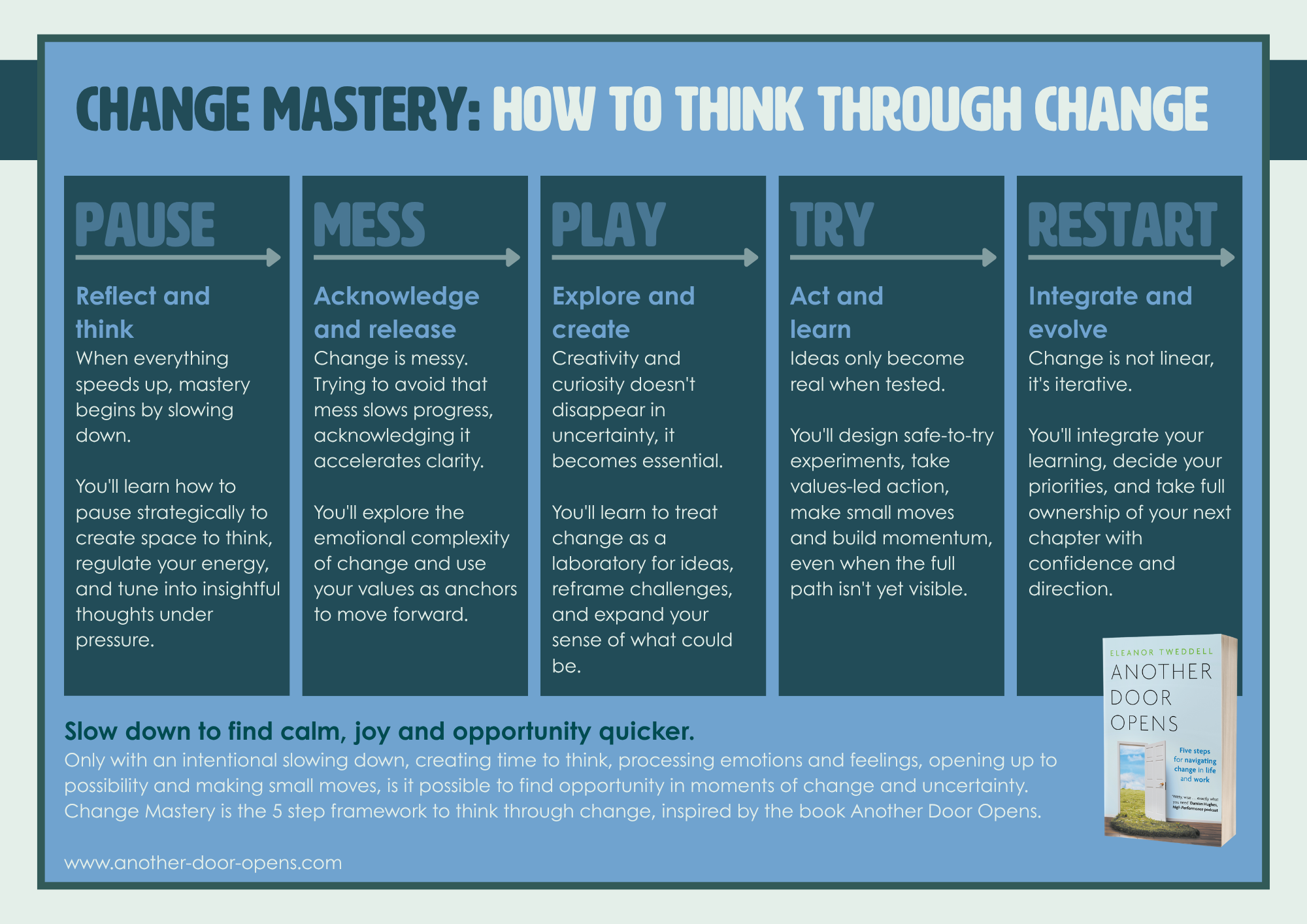
Most of us were never taught how to think through change. We were taught how to manage it, get through it, maybe even survive it. But managing change and actually thinking your way through it so that you see change as an opportunity, that’s a different skill, a mastery.
That's the gap Change Mastery is built to close.
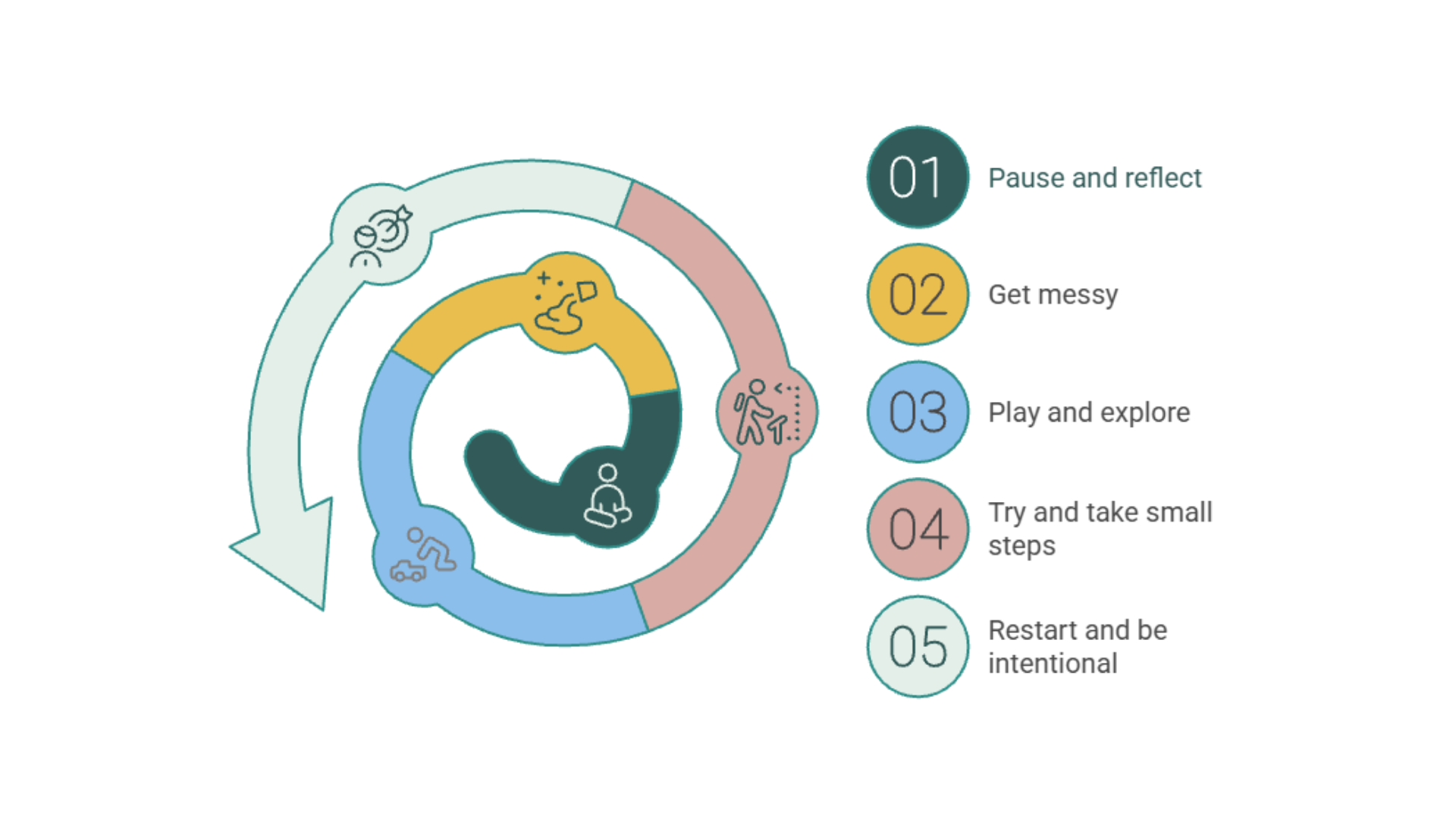
It's a five-step framework; Pause, Mess, Play, Try, Restart, that gives you a way to think. And it applies whether you're navigating a restructure at work, a relationship ending, a move, a diagnosis, or simply the low hum of everything feeling like too much lately.

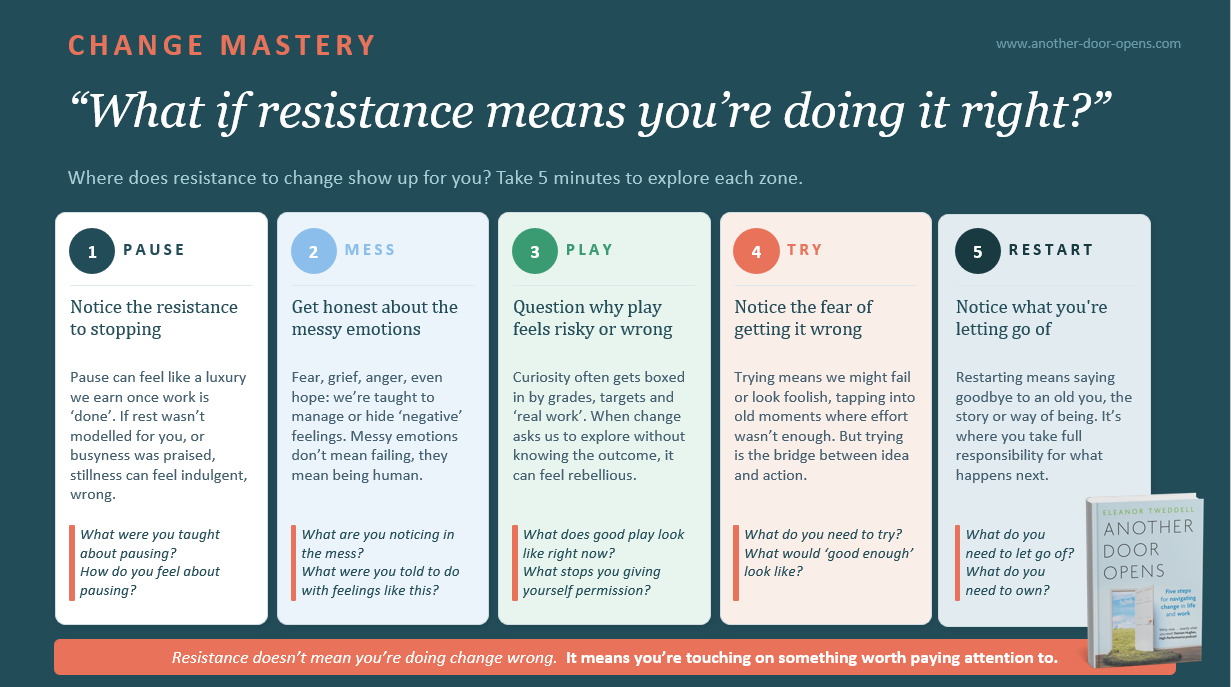
Change isn’t a straight line. It’s not a five-step plan (yes I know, the irony!) or a project timeline, or falls in sequence. It’s a lived, human experience and like all things human, it’s messy, non-linear, and often full of contradictions.
There are five zones that we move through in times of change: pausing, messy emotions, playing, trying, and restarting.
This comes with a ‘warning’ or ‘watch out’ - each of these zones carries its own kind of resistance. Not because we’re doing change wrong (because sometimes that’s how it feels), but because we’ve been taught, in subtle and not-so-subtle ways, to mistrust, or question, the very things that help us move through it.
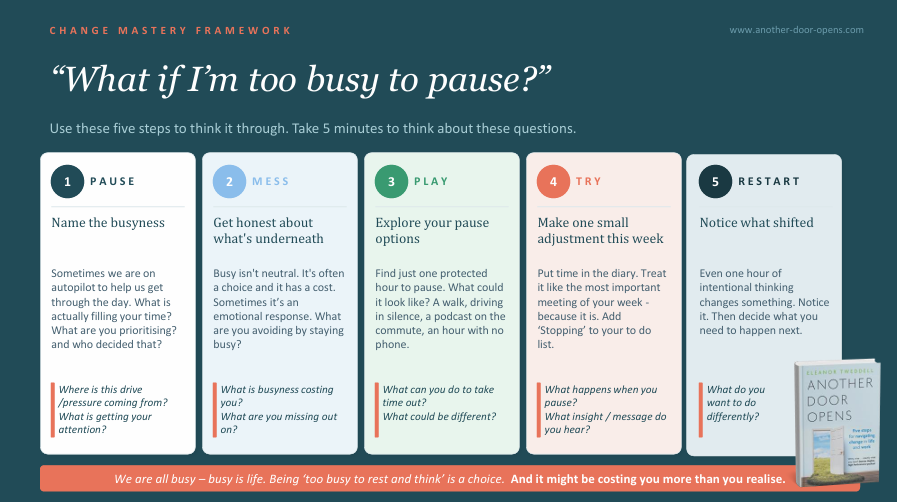
You're too busy to stop and think, but that's the problem.
I’m playing with the idea we get caught in the busyness loop, and it just spins and spins, and wears us out but we cant stop because the loop is keeping us looping. If we stop the loop, then who are we? everything will fall? everything will fail? Or will it?
"How are you?"
"Busy."
We say it so automatically we barely notice it. Busy is the default answer, the social shorthand, the badge we wear to signal that we are useful, needed, in demand, earned our place on this planet.
Except. Does it?

You want to go. You know that you'll feel better afterwards. You've never once come home from a workout and thought, well, that was a terrible idea. And yet here you are, on the sofa, negotiating with yourself about whether tomorrow counts as essentially the same as today. You are not lazy. Or maybe you are? You are human. Or maybe… well actually you are but, there's actually a name for what's happening.

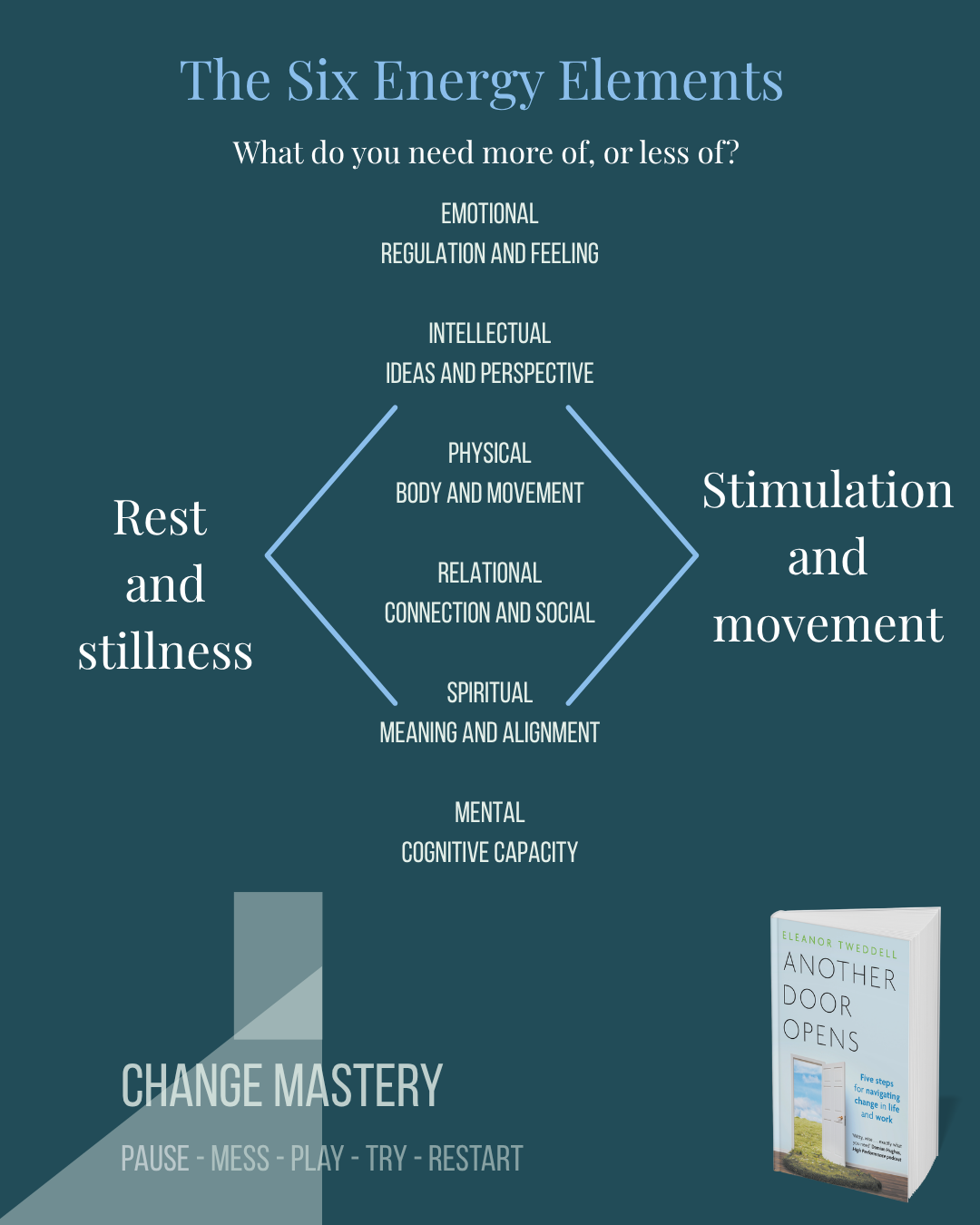
Change has a peculiar way of keeping us busy. We rush to fix, fill, and figure things out, often without stopping to ask ourselves the most important question: what do I actually need right now?
This is where the Strategic Pause comes in. Not a pause as in doing nothing (though that's sometimes exactly right), but a deliberate, intentional moment of checking in with yourself. Once you know about the Strategic Pause (and the six energy elements) it will help you through all kinds of life’s moments.

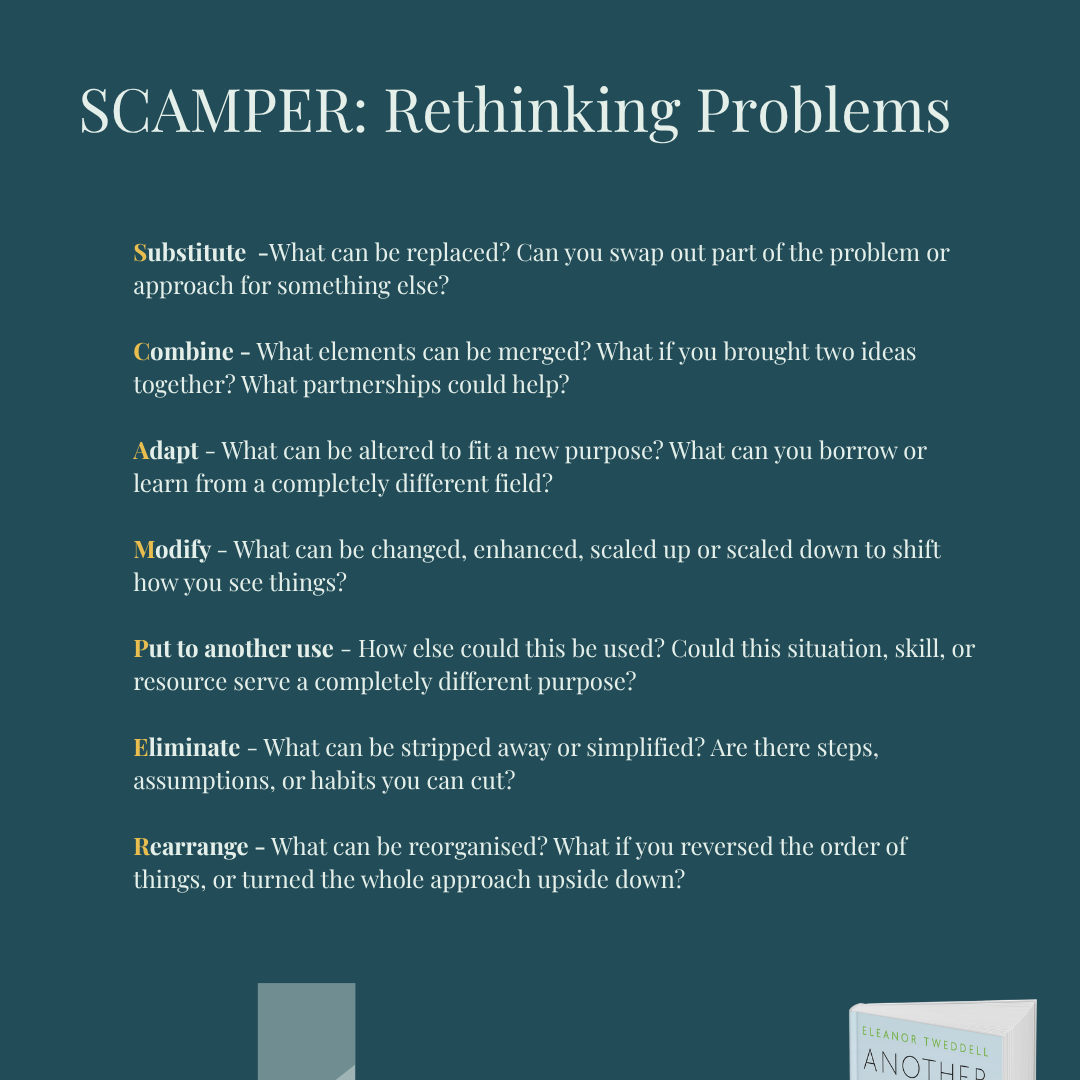
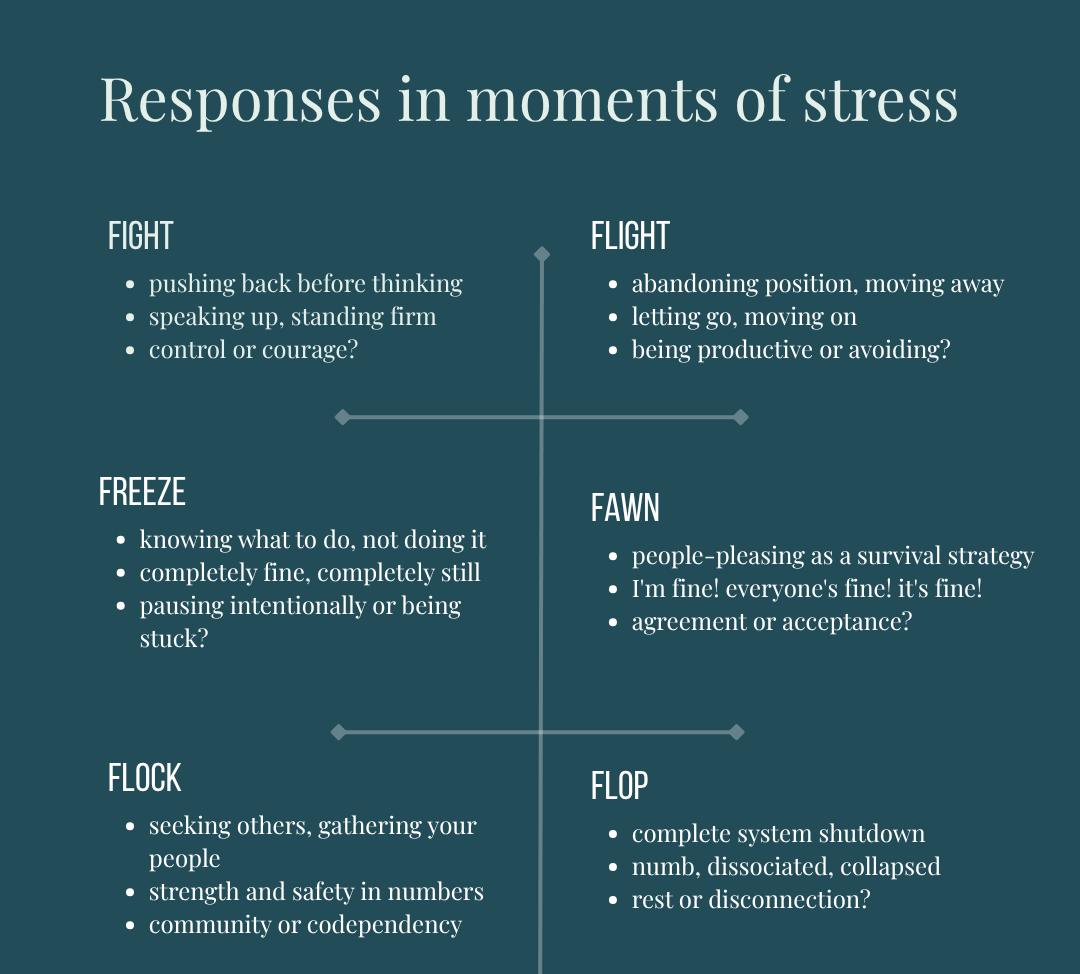
The cost of unmastered change isn't just personal stress. It's disengagement. It's decisions made from fear. It's good people burning out because they're navigating constant transitions without the tools to integrate them. It's disruption experienced as threat, when it could be experienced as advantage. Change Mastery isn't about having all the answers. It's about being grounded enough to find them.
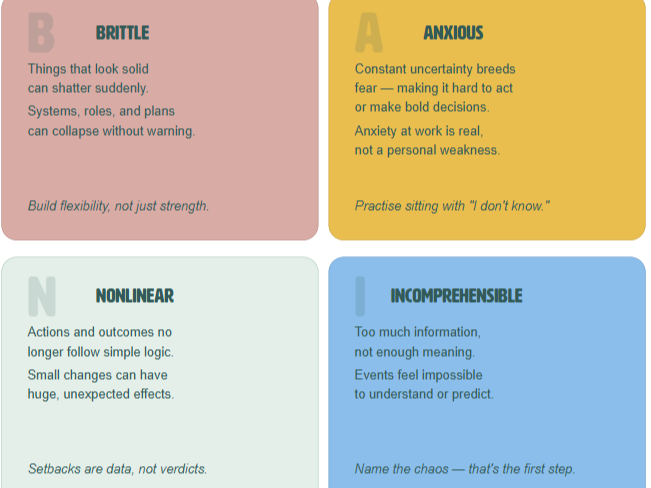
BANI is there to name what we're already living through. And as anyone who has navigated a significant change will tell you, naming something is powerful. That shift, from confusion to recognition and acknowledgement, is where change mastery begins. Not having all the answers. Not being unaffected. But being able to say: I see what's happening here, and I can work with this.

Trembling is what happens before we fall apart. It’s the red fags that perhaps we can take more notice of. It’s the quiver in the voice during a meeting when everything is “fine.” It’s the restless sleep, yep those 3am sweats. The sudden tears at something small (like when watching Punch the Monkey! Ecosia it). Or maybe the inability to concentrate. And then the overwhelming feeling that the ground beneath you is shifting, and it feels like you have no control.

Think about the stories you have heard from people who have achieved societally perceived success. Founders who launched companies with no funding. Athletes who trained for medals no one thought they could win. Writers who finished books after years of rejection. It can sound absolutely delusional listening to their origin story.
So what if that “delusion” isn’t the mis-step we are lead to believe, what if we need a little bit delusion to help us to make the moves we want to make.
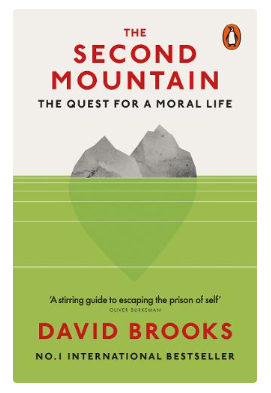
In The Second Mountain, David Brooks shares a metaphor for the shape of a life. We begin on the first mountain, the climb of achievement, identity, independence, success. Then, often through disappointment or disruption, we pass through a valley. On the other side rises the second mountain, a life organised around commitment, service, love, and giving ourselves to something beyond our own advancement
But my pondering, while I read, is, there aren’t just two mountains. There could be three. Or four. Or more.
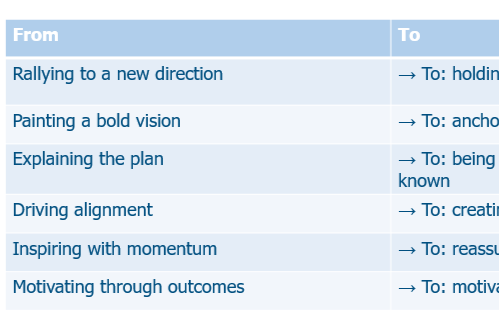
Leading through uncertainty isn’t about inspiring speeches or bold declarations. It’s about calm. Presence. Regulation, to use the word of the moment. It’s about that good old saying, “keep calm and carry on” but not as a slogan, but as a practice that can be felt.
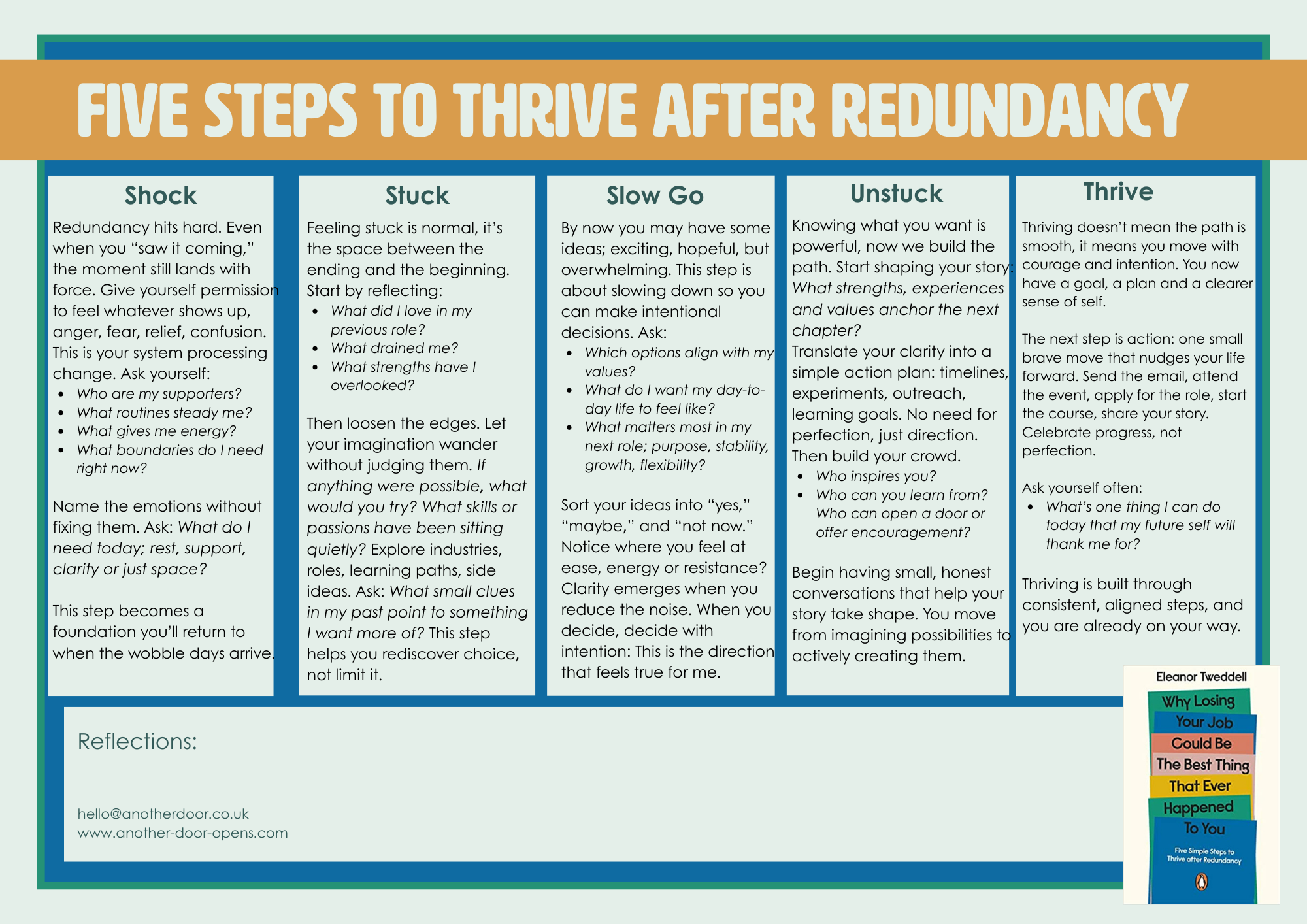
Redundancy is one of life’s sharpest, ouchiest (real word) curveballs. Even when the rumours circulate or logic tells us “it could happen,” the moment itself still lands with weight. It interrupts our routines, our identity, our sense of stability. This five-step framework is designed to guide you from shock to clarity, from stuckness to forward motion, and ultimately to thriving again.
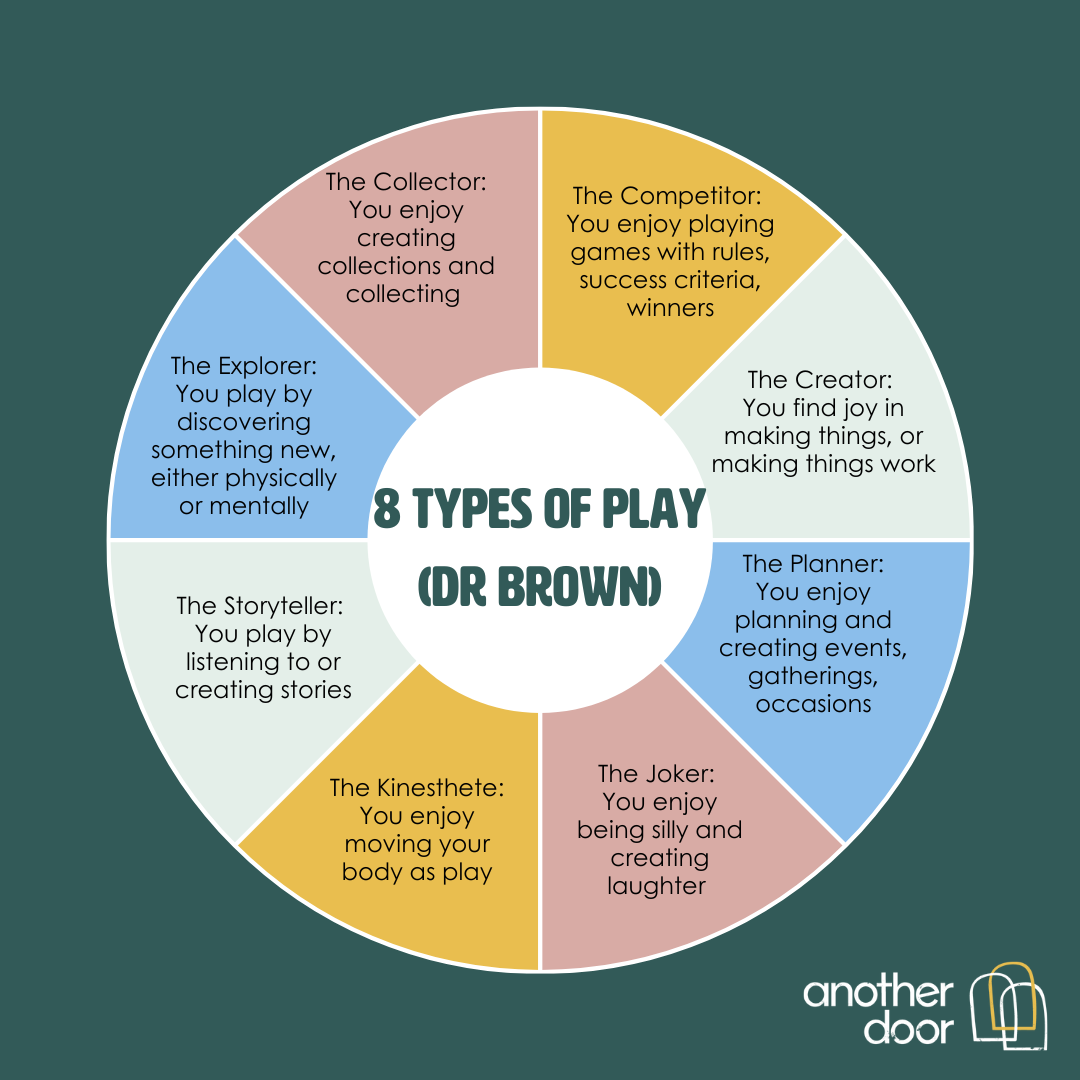
Change doesn’t require us to become more certain. Often, it asks us to become more curious. Play is how we practise that, not as an escape from reality, but as a way back into it. Not everything has to be serious to be meaningful.
Sometimes the most important shifts begin when we allow ourselves to play.
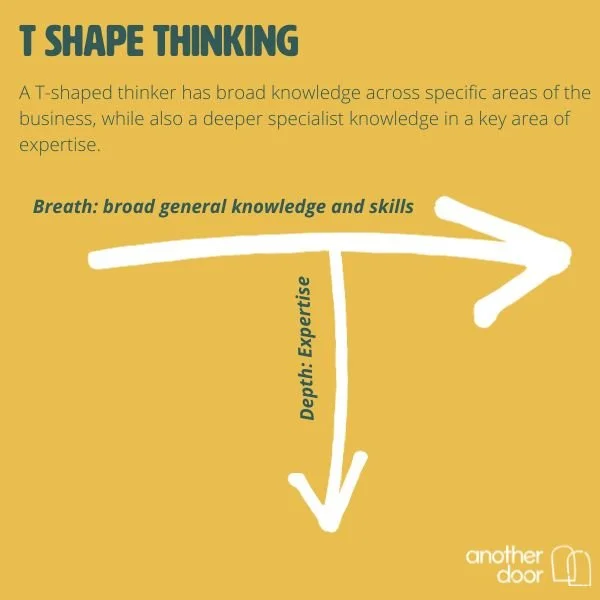
T-shaped thinking gives you permission to stop choosing between focus and curiosity. And the dreaded niching. You don’t need to become someone else. You just need to widen the conversation around who you already are.
This is often where a business idea sharpens, a body of work evolves, or a new offer becomes obvious.
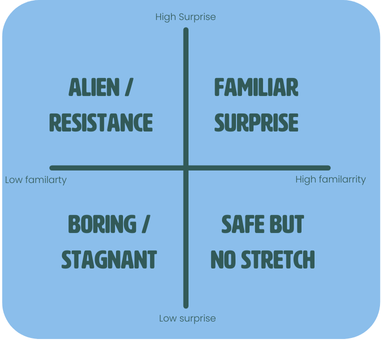
MAYA stands for “Most Advanced Yet Acceptable”, a principle coined by the industrial designer Raymond Loewy. People are drawn to innovation and new shiny objects, but only up to the point where it still feels safe, recognisable, and familiar. Push too far ahead of what people are ready for, and the idea is rejected. Stay too close to what already exists, and nothing changes.
Progress lives in the tension between the familiar and the surprising.

There’s a moment where something has clearly finished - a job, a role, a relationship, a version of you - but you aren’t particularly sure what is beginning, and you find yourself standing there thinking: Ok. Now what?
This is the liminal space. Like you are in suspense. The uncomfortable pause after the door has closed, before another one opens. It can feel exposing, unsettling, and deeply personal and confusing. You might be grieving what was, relieved it’s over, angry it ended this way, or quietly terrified that nothing is coming next. Often, it’s all of those things at once.

Christmas can be a much needed buffer. A moment between what was and what will be. Maybe. Even if it doesn’t feel like it. Even if everything is uncertain. Even if you’re simply trying to get through. If all you do this Christmas is breathe a little deeper, rest a little more, distract your mind, and let yourself be off duty, you’ve done enough. You’ve honoured the transition you’re in. And you’ll be better equipped to face whatever comes next.

In my book Why Losing Your Job Could Be the Best Thing to Happen to You, I describe three options available to us at moments like this: Stick, Twist or Bust. They’re not career strategies in the traditional sense. They’re ways of thinking, lenses that help you navigate uncertainty without force before you’re ready.

If you’re thinking about writing a book, it great to set out some principles which will help shape the book. Start with questions about why you are writing it, why would someone buy it, what is the problem you are solving for the reader, who are they and then some creative principles which will then make it yours and unique to you.
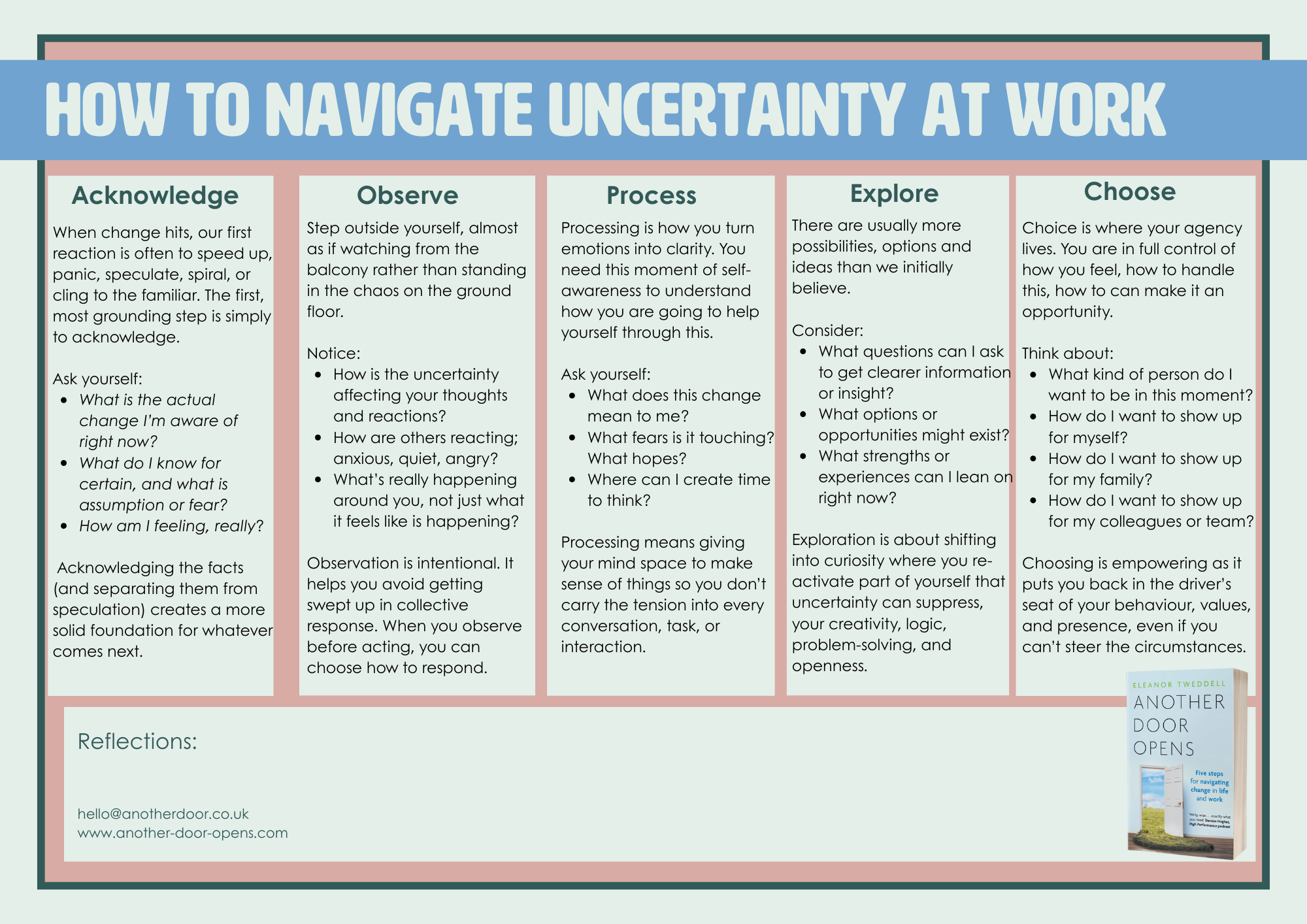
Change can come slowly and then suddenly, an (expected) announcement, a (rumoured) restructure, a (much talked about) takeover, and then you are in suspense as redundancy consultations that aren’t yet confirmed but loom in the air. It creates a space of liminality: that uncomfortable in-between where nothing is clear, emotions run high, and our minds race faster than facts can keep up.

You’re not “getting left behind” with AI. In moments of, what can feel like, revolutionary change, there is a swell of getting busier, ‘catching up’, chasing, getting ahead. But that can also cause burnout and overwhelm before we’ve even started. So how we can approach AI development with an open curiosity, to understand what it can really do, and contribute to the world, rather than join the 100m sprint into the land of ‘Who-Knows-Where’ (which should’ve been a land in the Never Ending Story but wasn’t).

There’s a moment in every change journey when the old ways no longer fit, but the new ways haven’t fully formed. The door has closed, but the new one is yet to open. It’s where news has come, but the news doesn’t include how it ends. This liminal space is not a waiting room. It’s where the magic begins.

“Crying does not indicate that you are weak. Since birth, it has always been a sign that you are alive.” - Charlotte Brontë, Jane Eyre