When change shows up, ‘playing’ is probably the last thing we think of to help us through. Instead we tighten up, need a firm plan, want to find the answer. We tell ourselves this is not the moment for messing around. And yet, change is exactly the moment when play matters most.
Because play is how we loosen the grip of certainty.
In moments of transition, a door closing, a role shifting, an identity wobbling, the pressure to have things “figured out” can shut down our thinking. We move into performance mode. Outcome mode. Right-or-wrong mode. Play offers something different: a way back into curiosity, noticing, and possibility. It invites us to explore without committing, to try ideas on without marrying them, to stay open long enough for something new to emerge.
Play is not frivolous. It’s a cognitive state. Play is serious business!
Research consistently shows that play activates divergent thinking, the ability to generate multiple ideas rather than hunt for a single correct one. When we play, the brain becomes more flexible, more associative, more imaginative. That’s why play is so powerful during change: it helps us think around a problem instead of charging straight at it with the same tools that no longer work.
This is something the Institute of Play has spent years exploring. Their work reframes play not as downtime, but as a ‘serious’ driver of learning, creativity, and innovation. In uncertain environments (classrooms, organisations, lives) play allows people to explore safely. You can test, adapt, discard, and iterate without the emotional cost of being “wrong.”
When I coach people I often ask ‘how can you play with that idea?’. A gentle nudge to hold the idea or feeling lightly, rather than feel the weight of commitment.
Play creates psychological breathing room, thinking with our shoulders relaxed.
That breathing room matters because change often shrinks our world. We narrow our focus. We stop noticing. We become efficient but rigid. Play gently does the opposite. It expands attention. It invites “what if?” instead of “what now?” And crucially, it gives us permission to not know, which is often the most honest place to start.
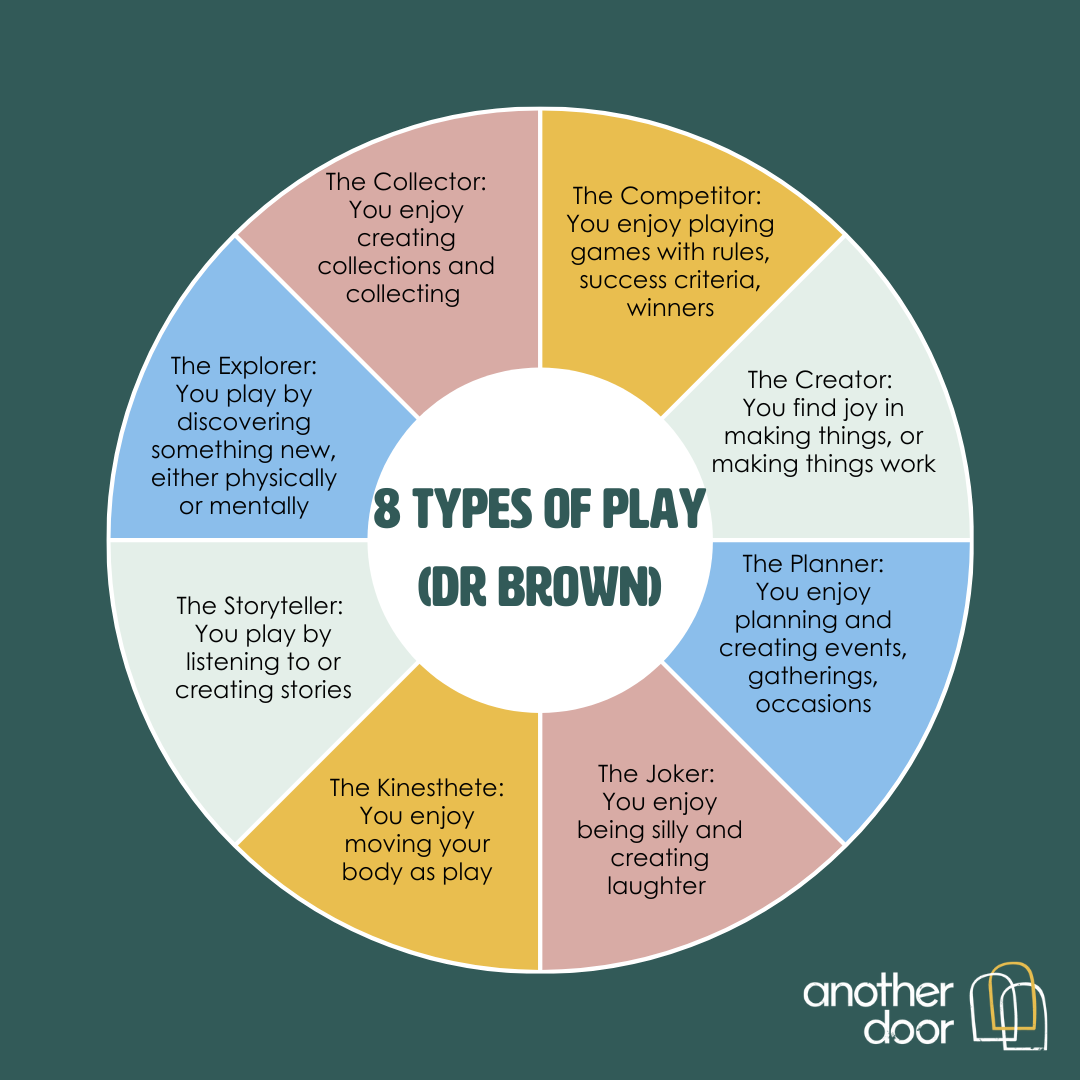
Dr Stuart Brown has spent decades researching into play, and shows that play is not something we grow out of, but something we grow through. He identified eight different play personalities, including the Explorer, the Creator, the Joker, the Kinesthete, the Collector, the Competitor, the Organiser/Director, and the Storyteller. The point isn’t to label ourselves, but to recognise that everyone plays, just differently.
Some people play through movement. Others through ideas. Some through humour, others through making, organising, or imagining narratives. When change hits, we often assume play has to look a certain way, light, silly, loud and if that’s not “us,” we opt out. But play can be quiet, thoughtful, solitary, physical, strategic, or imaginative. There is no single right way in.
This matters because play reconnects us with ourselves when change has pulled us off-centre. It helps us remember how we explore, how we learn, how we generate energy. And unlocks fresh ideas and perspectives from places we would never have thought about in our usual daily life.
There’s also compelling evidence from the world of making and building. Studies involving LEGO Serious Play, for example, show that hands-on, playful construction can unlock deeper thinking and insight than discussion alone. When people build ideas with their hands, rather than just talking about them, they access tacit knowledge, emotional truth, and unexpected connections. The act of play bypasses overthinking and invites meaning to surface.
And that’s the magic of play in moments of change: it helps us notice and discover. Not just outcomes, but signals. What energises us. What frustrates us. What we keep coming back to. What we’re curious about when no one is watching. Play doesn’t demand clarity. It creates the conditions for it.
So instead of asking “What’s the right next move?” play invites a sofer exploration of what’s next and what’s possible.
3 things to think about:
What is intriguing me right now, even if it doesn’t make sense yet?
Follow interest energy before activation strategy.What form of play is my default; thinking, making, moving, joking, collecting, storytelling?
Work with your nature, not against it.What am I noticing when I’m not trying to solve anything?
Pay attention to patterns, not plans.
Change doesn’t require us to become more certain. Often, it asks us to become more curious. Play is how we practise that, not as an escape from reality, but as a way back into it. Not everything has to be serious to be meaningful.
Sometimes the most important shifts begin when we allow ourselves to play.