Change is not something that just happens to you
Navigating change is a skill we all need to be working on.
Most of us treat change like weather. Something that arrives uninvited, disrupts everything, and eventually passes. We brace for it. We endure it. We wait for it to be over. So what if that's the wrong relationship?
Change isn't weather. It's the climate and environment. It's not an occasional disruption, it's the permanent condition of being alive. It always has been. To live is to change. And working in the world right now is reminding us of that every where we look. The question isn't whether change will come. It's whether you know how to acknowledge it, process it and work with it when it arrives.
That's what Change Mastery is about.
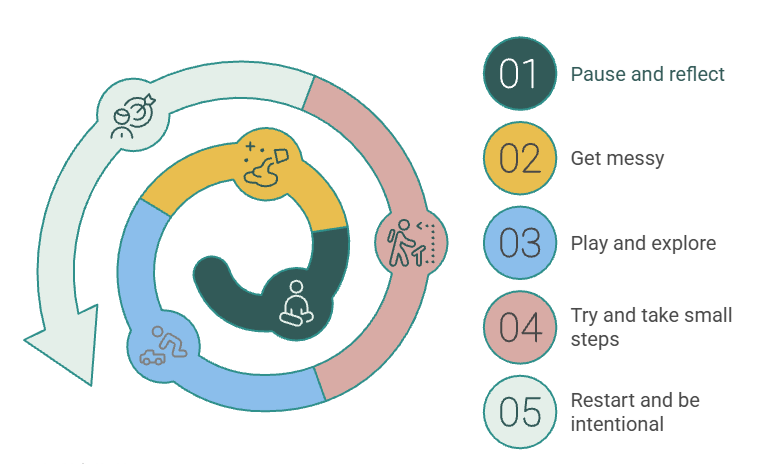
The Five Steps That Change Everything
The Change Mastery framework isn't a process to follow linearly. It's a framework that helps you to think through change. To have tools to hand that help you respond, process, think in the most helpful way for you.
Pause. This is the hardest one for most of us, because the pressure is always to act. But reactive decisions, made from urgency rather than intention, are not always the best for us. Pausing isn't passive. It's the deliberate act of slowing down so you can think clearly, separate fact from the story you're telling yourself, and understand what you actually need. Those of us who master the pause make better decisions. Full stop.
Mess. Change is uncomfortable, there is no escaping! Pretending otherwise is missing the point. This step is about naming what's difficult, mapping the emotional landscape honestly, and using your values as anchors when everything else feels unclear. There's something very powerful about being able to say this is hard and still know who you are. That's not weakness. That's the foundation of confidence and grit. It’s where calm lives.
Play. Once you open up to getting messy, then ideas arrive and say hello. It’s just how it works. So you need to open to up play with ideas and thuoghts. Play isn't frivolous, it's one of the most sophisticated cognitive states available to us, actually. When we shift from control to curiosity, we start to see possibility where we once saw threat. Reframing isn't wishful thinking; it's a thinking skill. Those who come alive in change are usually the ones who've learned to ask what could this make possible? instead of why is this happening to me?
Try. Big transformation doesn’t really happen through big leaps, or at least rarely. It comes through small, values-led experiments, tests designed to be safe to fail, so learning happens without catastrophe. This step is about building momentum, one deliberate action at a time. Not waiting for certainty and all the answers.
Restart. The most underestimated step of all. Restart isn't about going back to how things were, it's about integrating what you've learned and beginning again with more wisdom, more clarity, and genuine ownership of what comes next. We all have a great repertoire of restarts when we think about it. This step makes that intentional.
Why This Matters Right Now
The cost of unmastered change isn't just personal stress. It's disengagement. It's decisions made from fear. It's good people burning out because they're navigating constant transitions without the tools to integrate them. It's disruption experienced as threat, when it could be experienced as advantage.
Those who will thrive in the next decade won't be the ones who stayed still. They'll be the ones who've learned to change well.
Change Mastery isn't about having all the answers. It's about being grounded enough to find them.
If you're navigating change - or leading others through it - the Change Mastery is built for you. It’s grounded in the research from the book Another Door Opens - the mindset of seeing change as opportunity.